Treatment for HIM
Peyronie’s Disease Treatment
Peyronie’s disease is a condition in which scar tissue (plaque) in a penis causes it to bend, curve, or lose length or girth.


Treatment for HIM
Peyronie’s disease is a condition in which scar tissue (plaque) in a penis causes it to bend, curve, or lose length or girth.
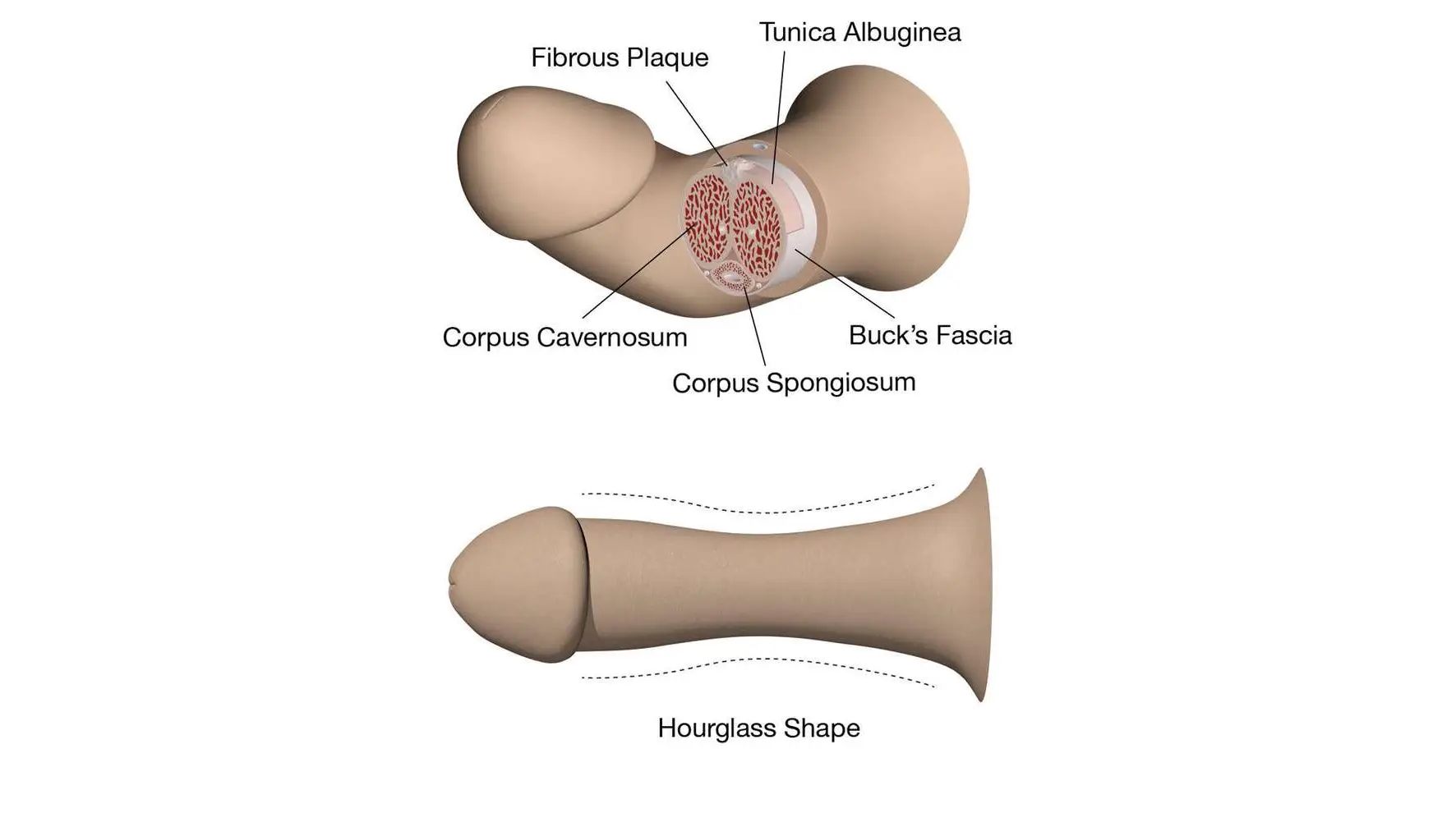
Peyronie’s disease is a connective tissue disease that can affect the penis, most commonly occurring in middle-aged men. It happens when there is fibrous scar tissue (plaques) that forms under the skin of the penis shaft, which causes it to bend, curve, or lose its length or girth. This condition eventually reduces the penis’s flexibility and leads to curvature during an erection.
As the scar tissue forms, you may experience pain in one specific part of your penis or be able to feel it through your skin. Depending on where the scar tissue is, your penis may bend up, down, or to the side during an erection. Some patients may develop an indentation, creating an ‘hourglass’ shape, rather than a pronounced curvature.
Note that the erections of most men are not entirely straight. Even if you have had a slight curvature in your penis your entire life, it does not necessarily indicate that you have Peyronie’s disease.
Peyronie’s disease progresses through two phases: acute and chronic.
Active or acute Peyronie’s disease: the acute phase can last from six to twelve months. During this time, the initial inflammation occurs, leading to scar tissue formation beneath the skin of the penis, resulting in curvature or other changes in shape. This phase could be painful, regardless of whether the penis is erect or flaccid. It is essential to get medical support during this acute phase to evaluate the seriousness of the condition and consider possible treatment options for Peyronie’s disease.
Stable Peyronie’s disease: in this phase, the condition has stabilised, with the curvature and other symptoms remaining relatively unchanged for at least three to six months. A stable phase means that the scar tissue is no longer progressing, and there is no further worsening of the curvature or associated symptoms. Erectile dysfunction (ED) may develop during this stage.
The exact cause of Peyronie’s disease is not fully understood. Still, most experts believe it develops after injury to the penis, even if the injury goes unnoticed at the time of occurrence.
For many men, the condition is thought to stem from repetitive minor trauma, such as bending the penis during intense sexual activity. Injuries may also occur during sports or accidents. However, many men with Peyronie’s disease do not recall any specific event that may have caused their symptoms.
Researchers suggest that these changes may develop slowly, as subtle, unrecognised injuries occur over time. In some diseases, like connective tissue diseases or genetic tendencies, the body is prone to producing excessive scar tissue even to minor trauma, which can lead to pain, penile curvature, and other symptoms.
Not everyone who experiences penile injury will develop Peyronie’s disease. This suggests that factors such as genetics, connective tissue disorders, and lifestyle influences, including smoking or certain health conditions like diabetes and high blood pressure, may increase the risk.
The primary symptom of Peyronie’s disease is a bend or curvature in the penis. Additionally, you might be able to feel scar tissue beneath the skin.
Other symptoms may include:
Peyronie’s disease can negatively affect your overall quality of life. More than 75% of men who have Peyronie’s disease experience stress and depression as a result. Unfortunately, many men with this condition feel embarrassed and often opt to endure their struggles alone rather than seek assistance.
The treatment for Peyronie’s disease varies based on the condition’s severity and whether it is in the early active phase or the later stable phase.
As with other sexual dysfunction conditions, treatment options are tailored to address both the physical symptoms and their impact on overall well-being. Choices include established medical therapies as well as advanced regenerative treatments, including the customised O Concept™ protocol. At Dr SW Clinics, each patient is offered a personalised plan to help restore function and improve their quality of life.
There is no single treatment for Peyronie’s disease that is appropriate for every patient. Some traditional treatments for Peyronie’s disease focus on symptom management, curvature reduction, and sexual function preservation. The best treatment option depends on the severity of the condition and whether it is in the active or stable phase.
Peyronie’s disease treatment options include:
Observation: if symptoms are mild and don’t greatly affect sexual function or quality of life, a “watchful waiting” approach may be advised. This means monitoring the condition to see if it stabilises or improves without treatment.
Medications: while no drug can cure Peyronie’s disease, oral options like vitamin E, pentoxifylline, and colchicine may ease pain, inflammation, and plaque build-up.
Injections: collagenase (Xiaflex) and other medications can be injected directly into scar tissue to break it down and reduce curvature.
Physical Therapy/Traction: penile traction devices apply gentle, controlled tension to stretch scar tissue and improve curvature.
Surgery: in severe cases, surgery may straighten the penis. Options include:
Penile Prosthesis: when Peyronie’s disease occurs with severe erectile dysfunction, a penile implant can restore function and correct curvature.
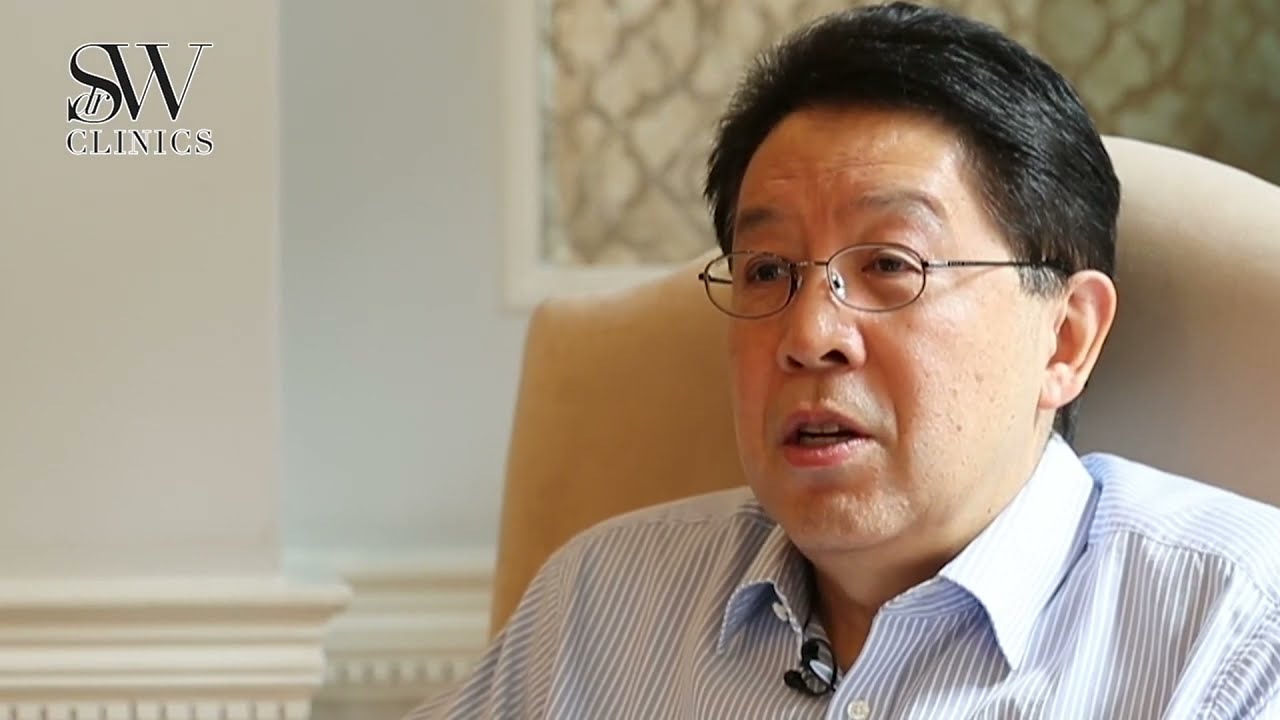
The O Concept™ was developed by Dr Wakil, providing a variety of non-invasive therapies for sexual dysfunction, which are now offered as treatment for Peyronie’s disease in the UK.
The O Concept™ is a customised approach that delivers a Peyronie’s disease treatment plan tailored specifically to each patient’s unique circumstances to optimise outcomes. It utilises therapies in a designated sequence and at specific intervals, taking into account the individual patient and their particular condition.
Known as the Godfather of Sexual Aesthetics, Dr Wakil has received numerous local and international awards for his contributions to sexual rehabilitation and penis rejuvenation, having successfully treated over 25,000 cases globally.
Sensitive Content
These photos contain nudity. You must be at least 18 years of age to continue. Are you over 18 years of age?
Testimonials

Dr SW Clinics
An award winning clinic












Frequently asked questions
Is Peyronie’s disease contagious?
No, Peyronie’s disease is not a sexually transmitted infection (STI), nor is it contagious.
Does it cause erectile dysfunction?
Indeed, Peyronie’s disease can lead to erectile dysfunction. The plaque or scar tissue on the penis can disrupt the ability of the penis to retain sufficient blood during an erection. Consequently, this can result in difficulty achieving or maintaining an erection firm enough for sexual intercourse.
Why go for the O Concept™?
The O Concept™ protocol, founded by Dr Wakil, uses the latest cutting-edge non-surgical treatments that could achieve similar surgical results, in just a few sessions, approx. 20-40 mins each, with no to very little downtime, and no side effects reported.
If you are experiencing symptoms of Peyronie’s disease, it is essential to get evaluated as early as you can. Schedule a private consultation at Dr SW Clinics to explore your options and find out if the O Concept™ is suitable for you.
Related articles

Erectile Dysfunction Treatment in the UK: A Clinical Guide to Shockwave Therapy, P-Shot, Penile Fillers & More

Artistry & Efficacy,
Unmatched Results.
Dr SW Clinic is shaping the next generation of life-enhancing, whole-person care. with protocols built around your body, your goals, your life.
Reignite. Rejuvenate. Rediscover.